

News & Events
-
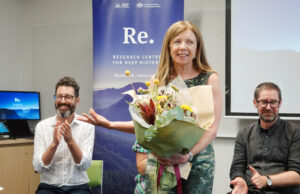 Read more: The End of Deep History? The Finale
To mark the closure of the Research Centre for Deep History and the completion of the seven-year Laureate program, we ran a day-long event entitled The End of Deep History? On the 19th February 2025, we had plenty of time to ponder the value of ‘deep history’, where we’ve been as a team, and whether…
-
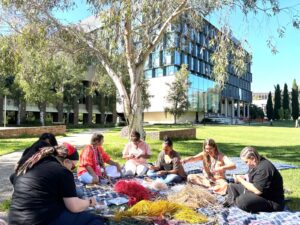 Read more: Indigenous Family History Research Residency 2025
The Research Centre for Deep History was very pleased to host the third Indigenous Family History Research Residency from 28 January to 7 February 2025. We welcomed 10 Indigenous family historians who spent 8 days in Canberra. The program for this residency followed those of the earlier programs, with participants visiting archival institutions, with support…
-
 Read more: Event: The End of Deep History? Where have we been and where to now?
Wednesday, February 19 · 9:30am – 5.30pm AEDTAustralian Centre on China in the World (Seminar Room), The Australian National University (Canberra): Building 188, Fellows Lane Acton, ACT 2601 A reminder to register for the symposium next Wednesday marking the end of the Research Centre for Deep History and the seven-year ARC Kathleen Fitzpatrick Laureate Program ‘Rediscovering the…
Marking Country
Marking Country visualizes Australia’s deep history.
This is a history that extends far beyond the two and a half centuries since the arrival of British ships from the northern hemisphere.
This is a history that extends far beyond the two and a half centuries since the arrival of British ships from the northern hemisphere.

Sign up to our newletter
Email rcdh.admin@anu.edu.au with “Subscribe to RCDH Newsletter” in the subject line.


All rights reserved ® Research Centre for Deep History, The School of History, The Australian National University | Built by Tabs.