-
Decolonizing Oral Histories: Reframing and restorying the past in Aboriginal Australia
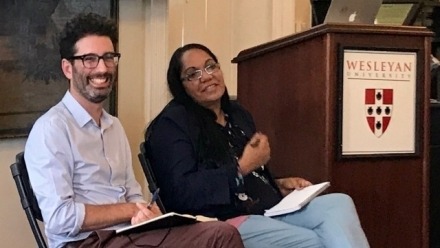
On Tuesday 16 April, Wesleyan University’s Indigenous Studies Research Network hosted its annual symposium, with the theme ‘Decolonizing Oral Histories: A Symposium on Reframing and Restorying the Past in Aboriginal Australia’. This year, the two speakers were RDHP advisory committee member Lorina Barker, of the University of New England, and RDHP Postdoctoral Fellow Ben Silverstein.
At this well attended event, Ben delivered a paper titled ‘Eventful Histories: Narrating the Deep Past in Broome, Western Australia’, which approached the deep past by turning to think with and through Yawuru historical narration. The paper considered some of the ways this past might be populated and eventful in ways that condense meaning, reflecting on the implications of working with a past that is in intimate relation with people today.
-
The Devil’s Country screening
Devil’s Country Trailer from Digital Media Unit on Vimeo.
The Devil’s Country will be screened at the Sacred Histories symposium on Friday, 23 August 2019.
-
RDHP Team Members join celebration of a local deep history stone axe quarry
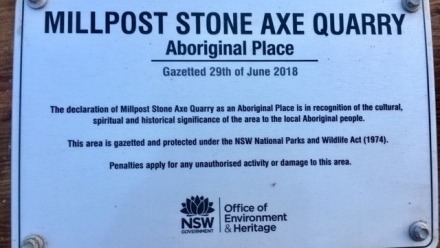
RDHP Team members Josh Newham and Julie Rickwood attended a ceremony to celebrate the gazettal of the Millpost Stone Axe Quarry as an Aboriginal Place with the New South Wales Office of Environment and Heritage on Tuesday 21 May.
Located between Queanbeyan and Bungendore, Millpost is a family run farm whose owners, Judith Turley and David Watson, were recently made aware that their property was also once the site of an Aboriginal quarry. Evidence on site suggests that local indigenous people harvested the abundant metadolerite from an exposed hilltop on the property for thousands of years, working the stone into axe blanks before grinding the edges sharp on sandstone outcrops found in the creek system below.
Elders and members of the Ngunnawal community were in attendance, as well as members of the New South Wales Office of Environment and Heritage (OEH), local landholders, and staff and students from the ANU community, including members of the School of Archaeology.
The event began with a Welcome to Country, which was followed by talks from Ngambri and Ngunnawal Elders Matilda House and Wally Bell, OEH archaeologist Dave Johnston, and Mill Post owners Judith Turley and David Watson, all focussing on the collaborative nature of the project to have the site gazetted, and the importance of the site and the history it represented for local communities. The gathered crowd then ascended the hill to view the quarry site and see its significance in the local landscape, with further guidance from Dave Johnston. They then descended for a celebratory afternoon tea. Further collaborative study into the site will be conducted by a multidisciplinary team from the ANU collaborating with traditional custodians and landowners.
-
Professor Ann McGrath appointed the W K Hancock Professor of History
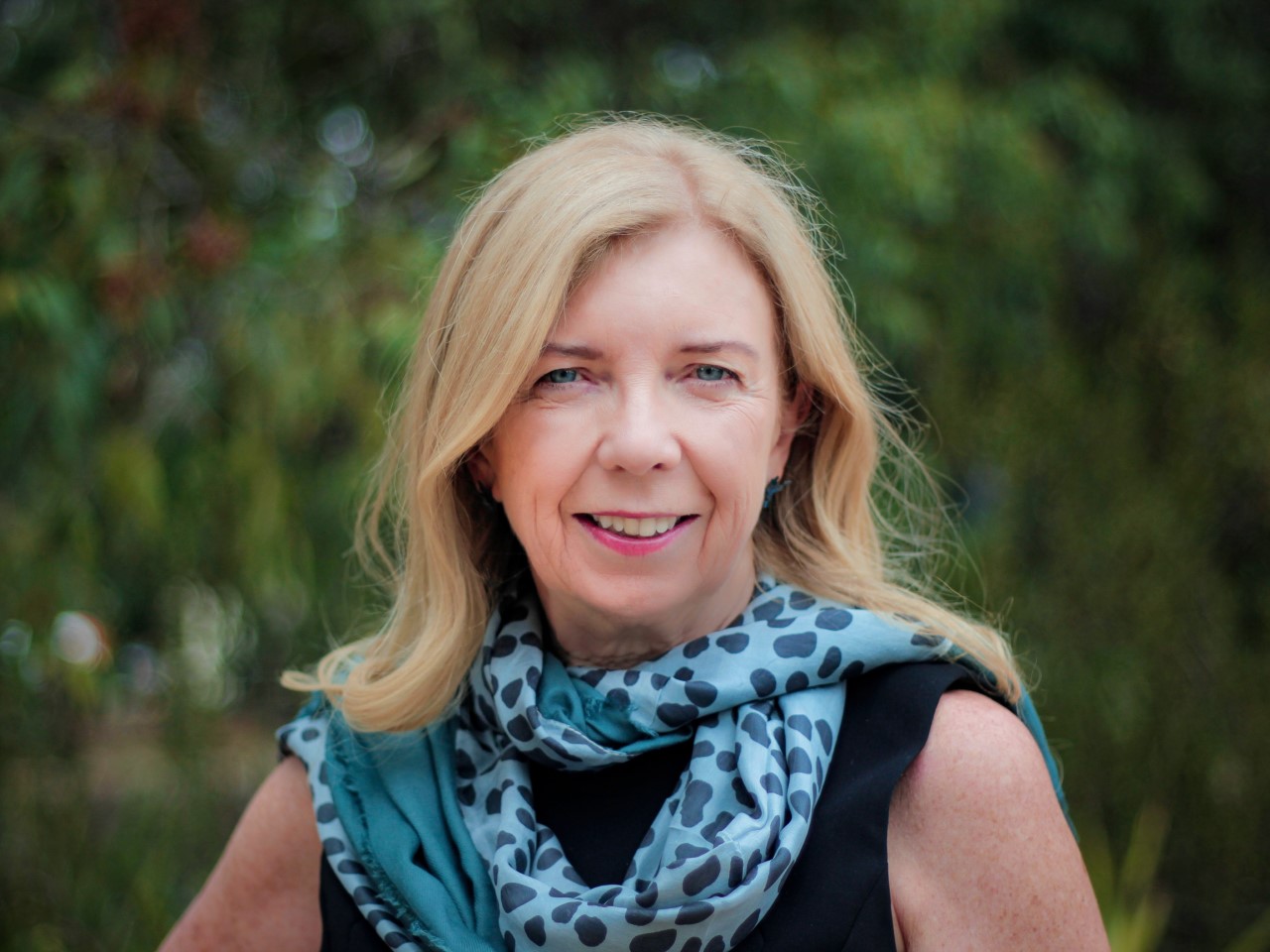
Congratulations to Professor Ann McGrath who has been named the W K Hancock Professor of History at the ANU School of History College of Arts and Social Sciences. Professor McGrath is the Director of the Rediscovering the Deep Human Past Laureate Program, a Fellow of the Academy of Social Sciences and the Academy of Humanities and was made a Member of the Order of Australia in 2017, recognising her significant contribution to Indigenous history and education as academic and researcher.
Her 2015 book ‘Illicit Love: Interracial Sex and Marriage in the United States and Australia’ received the NSW Premiers History Prize.
As the next W.K. Hancock Professor of History, Professor McGrath will hold the title for a period of 5 years.
-
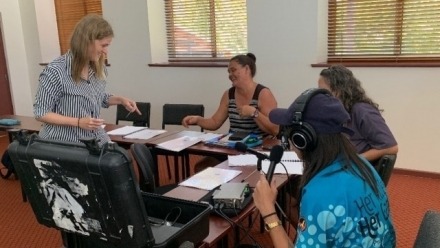
RDHP’s activities and initiatives highlighted in latest CASS RAP Newsletter
Indigenous Training Program
While doing fieldwork in Broome in February 2019 members of the RDHP Team held the first Indigenous Training Workshop at Nyamba Buru Yaruwu.
With the support of the National Library of Australia, the Senior Curator of Oral History and Indigenous Programs, Shirleene Robinson, led workshops and hands-on exercises in quality oral history recording.
Indigenous Mentoring Program
Naomi Appleby is a Karajarri Yawuru woman working as the Project Coordination Officer for Future Acts & Heritage and Land & Sea at Nyamba Buru Yawuru.
Naomi also participated in the NLA Oral History Training workshop and will undertake further training and mentoring, including at the ANU, in the future.
Harvard Opportunity for PhD Scholar
In April, Aileen Marwung Walsh, joined other members of the RDHP Team, Professor Ann McGrath, Dr Ben Silverstein and Dr Laura Rademaker, at two scholarly events held at Harvard University.
Aileen attended the ‘Postcolonial Tensions’ workshop, convened by Gabriela Soto Laveaga and Warwick Anderson held on 12-13 April. On 15 April she attended ‘Deep Historicities: Indigenous Knowledges and the Science of Deep Time’ co-convened by RDHP Team members Laura Rademaker and Ben Silverstein, and Daniel Lord Smail of the Harvard History Department. Her presentation, drawn from her paper, “Time in Deep Time: When does historical evidence become deep human history?”, received a warm response, especially from discussant Dan Smail.
Aileen said of the trip, “I’ve been to many conferences and seminars over the years, but the interdisciplinarity and especially the high number of Indigenous academic participants made these seminars the best I have had the pleasure to take part in.”
-
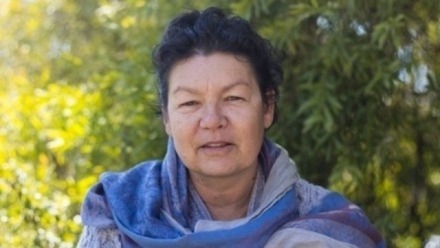
Aileen Walsh: Another scholarship, another conference
RDHP PhD student Aileen Marwung Walsh has received a full scholarship for the Professional Certificate in Indigenous Research at the University of Melbourne. The residential commences in July 2019 and Aileen looks forward to meeting fellow Indigenous postgraduates and discussing the problems that abound in Indigenous research contexts.
Aileen was also recently accepted to deliver a paper at the Encounters & Exchanges conference in New Zealand, with accommodation bursaries. This will be another opportunity for Aileen to meet other Indigenous people working within the interface of Indigenous and European sciences. Below is her abstract.
An Indigenous Science of Virtues: The role of virtues language for the healthy maintenance of country has not before been considered. Research on ‘caring for country’ abounds, but the practical and necessary application of virtues is missing. I argue, it is virtues towards country that have enabled Aboriginal cultures to maintain and sustain a healthy relationship with country and thus nurture a country that flourished for over 50, 000 years, until colonisation. Using ethnographic and descriptive materials of Aboriginal people from Daisy Bates and other colonisers, my research links the role of virtues with the work of Bill Gammage’s The Biggest Estate on Earth and Bruce Pascoe’s Dark Emu. The study of virtues is generally relegated to the disciplines of philosophy and religion, yet, as the discipline of psychology has discovered, virtues are necessary for human physical and emotional well-being. Virtues are the means by which humans stay safe. Europeans stopped applying virtues to country a long time ago and consequently, the uglier emotions of greed and fear have flourished leading to the ruination of the planet. A consideration of virtues language in relation to country needs to be considered in a systematic, perhaps scientific way because virtues need to be balanced. It is the balance of virtues between humans and country and between humans individually and culturally.
In other news, Growing up Aboriginal in Australia continues to sell nationwide. The book contains childhood stories of family, country and belong. Aileen is one of the contributors and you can purchase the book at Black Ink. Books or Amazon (#1 Best Seller in Essays).
Aileen’s chapter answers the question of what is it like to grow up Aboriginal in Australia? The anthology, compiled by award-winning author Anita Heiss, showcases many diverse voices, experiences and stories in order to answer that question. This ground breaking collection will enlighten, inspire and educate about the lives of Aboriginal people in Australia today.
Contributors include: Tony Birch, Deborah Cheetham, Adam Goodes, Terri Janke, Patrick Johnson, Ambelin Kwaymullina, Jack Latimore, Celeste Liddle, Amy McQuire, Kerry Reed-Gilbert, Miranda Tapsell, Jared Thomas, Aileen Walsh, Alexis West, Tara June Winch, and many, many more.
-
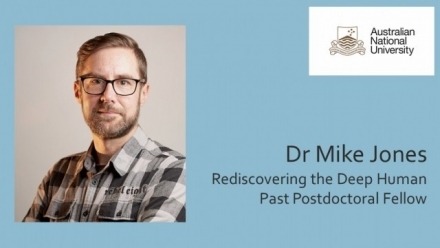
New members appointed to the Rediscovering the Deep Human Past Team
The Rediscovering the Deep Human Past Laureate Program (RDHP) Team is now complete with the recent appointment of Dr Mike Jones as a Postdoctoral Research Fellow. Mike will be starting with us on 1 July.
Earlier in the year, Josh Newham and Neil Brougham were awarded special RDHP Laureate PhD scholarships. Both have already been involved in team meetings and doctoral training workshops, while also undertaking preliminary research for their PhD theses.
We’d like to introduce them.
Mike Jones is an historian, archivist, and collections consultant. In December 2018 he completed his History PhD at the University of Melbourne’s School of Historical and Philosophical Studies. His thesis, Documenting artefacts and archives in the relational museum, is an interdisciplinary exploration of the interconnectedness of archives and museum collections, and the recent history of how collections-based knowledge (particularly related to anthropological and ethnographic collections) is conceptualised, captured, and managed by large collecting institutions.
Prior to joining ANU Mike spent more than a decade at the eScholarship Research Centre, working on and leading community-focused projects related to the history of science, archival description, Aboriginal and Torres Strait Islander history and data, digital humanities, and digital public history. During this time he has been actively involved in archival, museum, and digital humanities communities, and has published and presented widely in Australia and internationally.
On his appointment, Mike said “I am thrilled to be joining the Rediscovering the Deep Human Past Program, and look forward to working with a great team. I’m particularly interested in working with communities to explore how digital technologies can be used to capture and represent complex historical narratives, expanding and deepening the scale and scope of Australian history in innovative, exciting ways.”
Josh Newham is an historian, poet, artist and educator with a background in community work and outdoor education. A recent Honours graduate of La Trobe University in Melbourne, his thesis was an interdisciplinary analysis of the contact narratives of early exploration in the Southern Blue Mountains. This research in turn provided various hints of pre-1788 connections between Aboriginal cultures across the South East of New South Wales; from the Burragorang Valley in the Blue Mountains to the Monaro Plains and Snowy Mountains in the South, and from the Great Dividing Range in the West to the Pacific Coast. Mapping the various pathways of these connections has become the goal of Josh’s doctoral thesis and he is in the process of building networks and relationships with Aboriginal organisations, community and family historians and landholders across these regions.
Prior to joining ANU Josh travelled and lived in various areas of Australia’s East coast, including several years spent in the ACT. His undergraduate and Honours years at La Trobe University combined research in History, Creative Writing, Literature Studies and a Diploma of Languages (Spanish).
He is particularly interested in writing histories and narratives of place, and is excited to explore new and creative methodologies for the writing of Deep History. “As an historian, the RDHP Laureate Program is a dream come true for me. There is nowhere else I would prefer to be, and no other work I would prefer to be doing. The Program, and Deep History as a practice more generally, provides the opportunity to engage respectfully with Aboriginal cultures, their knowledge and their ongoing history of connection to place in the land we call Australia. I’m honoured and excited to have the opportunity to do so”, Josh added.
Neil Brougham is another of the RDHP Laureate Program’s PhD scholars. Prior to commencing in the RDHP Laureate Program, Neil worked as a liaison officer with the Northern Land Council, working with the Aboriginal community of Kakadu National Park. Prior to this Neil was a Park Ranger for six years; first in various locations across South Australia, then a three-year stint as Chief Ranger of Millstream-Chichester National Park in the Pilbara region of Western Australia. Neil also did other miscellaneous things: working as an English teacher in South Korea and studying ethnobotany in South America, among others.
Neil has a strong interest in mythology as it appears in its many forms globally, but in particular in Australia. His doctoral thesis builds on from his recently completed Honours thesis (Flinders University), looking at the way in which Aboriginal mythology can be utilised as primary data for historical reconstruction. Specifically, Neil’s thesis will focus on the mythological canon of Pilbara Aboriginal nations and the manner in which this canon records and expresses the spiritual, social, environmental, and political development of this region over time.
On his appointment, Neil said “I am very excited to join the RDHP Program and begin articulating ideas that have preoccupied my thinking now for several years”.
-
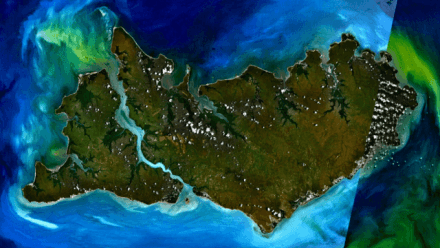
White grief, happy friendship: Jane Goodale and emotional anthropological research
Abstract:
‘In the 1950s, anthropologist Jane Goodale had bright hopes for her informant Happy Cook, an Aboriginal girl from the Tiwi Islands in North Australia, who she considered constrained by paternalistic government policies. Goodale was devastated witnessing Cook’s suffering over following decades. Looking at Goodale’s feelings of friendship turned to grief over the second half of the twentieth century, this article reveals a crisis of self-understanding among researchers in late twentieth-century Australia. This grief, originally private for Goodale, became increasingly public and performed in white anthropologists’ discourse as they wrote on Aboriginal communities’ experience. Goodale later concluded that this supposedly new era was, in many ways, similar to what had come before, a conclusion that brought on a grief shared by many of her generation. Her experience reveals how ethnographers’ subjective dilemmas and their performances of anti-racism through friendship shifted as they entered what they hoped to be a post-colonial context.’
-

Laura Rademaker’s new quest to awaken sleeping Indigenous languages
ANU School of History’s Postdoctoral Research Associate Dr Laura Rademaker has been featured in the latest edition of Canberra’s City News.
Dr Rademaker discusses the influence a trip to Chile had on her as an undergraduate student and her new quest to awaken sleeping Indigenous languages.
You can read the article here: https://citynews.com.au/2019/laura-wants-to-wake-sleeping-languages/
Dr Rademaker also recently released a new book, Found in Translation: Many Meanings on a North Australian Mission which was published by the University of Hawaii Press.
-
Thinking with Walter Benjamin
Date and time
Thu 07 Feb 2019, 9am – Fri 08 Feb 2019, 4.30 PMLocation
Melbourne Law School Room 628Conference ‘Thinking with Walter’ convened by Adil Hasan Khan and Ben Silverstein includes ‘What is Walter Benjamin’s Idea of Communist Society?’, ‘Walter Benjamin: the refugee and migrant’, Karavan’s Passages, ‘Surrealism: The Last Snapshot of the European Intelligentsia’, and more listed in the PDF program.

Publications


All rights reserved ® Research Centre for Deep History, The School of History, The Australian National University | Built by Tabs.