-
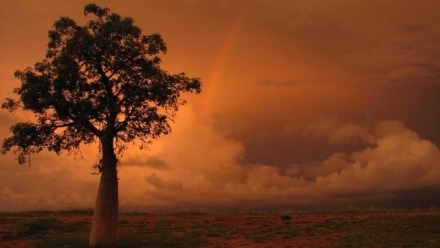
Understanding the deep past across languages and culture
Speakers
Prof Ann McGrath
Prof Jaky Troy
Dr Laura RademakerThis symposium asks what are the various ways of conceiving and knowing the past – beyond the linear, diachronic, documentary past of Western or academic history of today – and how might these inform the practice of researching the ‘deep’ human past? Further, how might the past be understood in relationship to the present, and what might this mean for the study of history?
Further information: https://history.cass.anu.edu.au/sites/default/files/docs/2018/10/Laureate_Symp_Sept_18.pdf
-
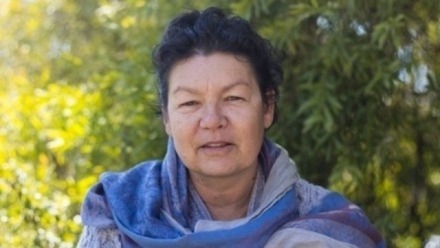
ANU History Scholar Awarded Nugget Coombs Scholarship
ANU School of History PhD student Aileen Marwung Walsh has been awarded a Nugget Coombs Scholarship. The Nugget Coombs Indigenous Australian Scholarships are awarded to undergraduate and graduate Australian Indigenous students, to support fieldwork and research.
Aileen came to ANU in 2018 after receiving one of three new Deep Human History Laureate PhD Scholarships. Her work forms part of the Deep Human History project, an effort to transform the scale and scope of history, and to analyse Australia’s epic Indigenous narratives alongside new scientific evidence, to create a new and expansive understanding of the history of Greater Australia and Sahul.
“The deep human time project is pushing the historiographical boundaries by using evidence that is not text based. The rules governing the types of evidence that historians can use to support historical narratives has been text based since the inception of Western history,” Aileen says of the project’s aims.
“The importance of the discipline of history to realise its potential as a discipline that can include everything, including knowledge from other humanities and science disciplines means that there is a possibility of generating a larger and greater world view that makes the world more comprehensible and should not be underestimated by the discipline. Knowledge for its own sake is inadequate. Knowledge creation or generation to understand reality, especially to understand how we got here, is I suggest an important purpose of life.
With the Nugget Coombs Scholarship, Aileen will conduct fieldwork in Spinifex country, examining the rules around transmitting knowledge.
“Aboriginal people have been able to maintain knowledge that has been proven to be correct and true for up to 7000 years in some places. That means that knowledge has been passed down and through many more thousands of generations of Aboriginal people without written texts.”
Examination of such knowledge and its longevity, challenges historical notions of Indigenous knowledge of the past as mere mythology. New research has highlighted the accuracy of stories dating back thousands of years.
“The relationship between Aboriginal people and place is thus very long in the minds of Aboriginal people and very strong because it is still remembered. Connection to country then is not just some mystical feeling or association, but a very strong genealogical relationship physically and philosophically.”
-
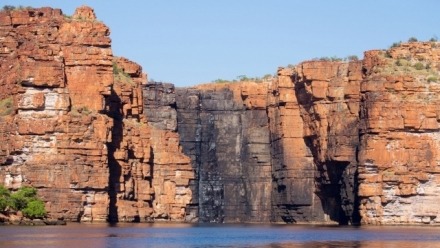
Deep Time workshop
Date and time
Fri 10 Aug 2018, 9AM–5PMLocation
UWA Institute of Advanced StudiesThis Deep Time workshop will attempt to grapple with some of the methodological and theoretical issues that beset a deep time history of Australia. Such a project would require a realignment of the chronology of Australia’s national narratives. This workshop will discuss some of the game changing evidence that could potentially inform a deep time history of Australia. It will consider a range of potential research and narrative approaches in order to examine the challenges, possibilities and impossibilities of translating Indigenous and scientific evidence into historical narratives. After all, any such deep time histories could reconfigure both Australian and global history.
Archaeologists, rock art specialists, geological, climatic, genomic and other scientists are uncovering substantial evidence about Australia’s ancient past. Indigenous knowledge custodians often attest that these western knowledge ‘discoveries’ only confirm what they already knew through their own modes of knowledge transmission. Australia’s national history knowledge gap remains.
Despite a general acceptance that Indigenous Australian civilization stretches back 60,000 years, young Australians say they are not taught much about Australia’s long human history.
Via collaborative approaches to deep time narratives, will it be possible to displace the imaginative hold of European navigators and ‘discoverers’, whose accounts are told in writing and text, with narratives of Australia’s deep human past? Without the written evidence that has underpinned western historical traditions, is it possible or even advisable to conceive of and present such a long stretch of time as ‘history’? This event will be held during Kathleen Fitzpatrick ARC Laureate Fellow and Distinguished Professor Ann McGrath’s visit to UWA. During her visit she will also deliver the 2018 Tom Stannage Memorial Lecture.
Speakers
Professor Ann McGrath, ANU
Dr Alice Gorman, Flinders University
Aileen Walsh, ANU
Dr Ben Silverstein, ANU
Dr Martin Porr, UWA
Dr Sven Ouzman, UWA
Professor Stephen Hopper, UWA
Alison Lullfitz, UWA
Dr Shino Konishi, UWA
Dr Glen Stasiuk, Murdoch University
Professor Len Collard, UWA -

Masterclass: Deepening the Time of History?
Date and time
Thu 09 Aug 2018, 10 AM–1 PMLocation
Institute of Advanced Studies, UWASpeaker
Professor Ann McGrathMust ‘History’ commence with a clear date? This interdisciplinary masterclass will explore why dates matter – or don’t. We will consider the processes of periodization that take place in researching and writing histories. What is the power, if not the sovereignty of periodization? What is the difference between dating, chronologies and periodization, and how can such techniques be applied to the deep human past?
The study of Australian history is still dominated by studies that commence with the dates of European landings – such as 1616, 1770, 1788 and 1826. This reinforces the notion that ‘history’ begins with written records and European arrivals. Yet the idea of a people without history or that history only started with written text is surely impossible to sustain.
An expanding field of archaeology has focussed upon gaining the most reliable dates for evidence relating to the deep human past. Periodization, timelines, dates and chronologies are key tools which are generally understood as essential to the practice of scholarly history. But why are dates necessary, and what kind of ‘history’ work do they do? How do they become meaningful in rituals of nation, in the assertion of sovereignty, in denoting identity and political power?
Drawing upon the co-edited collection (with Mary-Anne Jebb) Long History, Deep Time and the film Message from Mungo, we will explore contrasting approaches to the temporality of the deep human past. Historian Daniel Smail, among others, has called for an end to the use of the term ‘prehistory’ (2005) and for an expanded historical discipline that goes beyond ‘sacred history’ to explore the full expanse of the human past. Others argue for transtemporal approaches. However, indigenous knowledge custodians, interpreters and narrators have raised the greatest challenges, having long questioned standardized notions of temporality. What kinds of methodologies might enable disciplinary growth beyond conventional and prescriptive temporal boundaries?
-
Three Kinds of Clay, Three Kinds of Antiquity?
Date and time
Wed 08 Aug 2018, 6–7 PMLocation
Fox Lecture Theatre, UWA Arts BuildingSpeaker
Professor Ann McGrath‘The 2018 Tom Stannage Memorial Lecture by Ann McGrath AM, the Kathleen Fitzpatrick ARC Laureate Fellow and Distinguished Professor, School of History, Australian National University.
1901, 1790, 1968. A federation re-enactment of Captain Cook’s Landing at Botany Bay, the arrival of the second convict fleet, the surfacing of Mungo Lady. Each dated event takes place on a continent of multiple Aboriginal nations on which the earth itself is associated with narratives of antiquity. Human societies create their own mythos – trans-temporal scenarios that communicate between past and present, and across time and place.
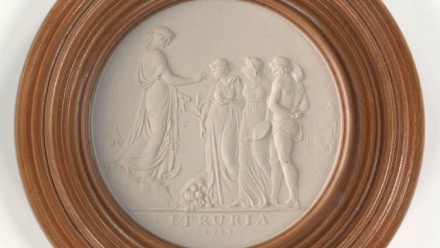
The Gweagal and Darug people’s uses of white clay attracted the attention of James Cook, Joseph Banks and Governor Phillip. In 1788, Phillip sent samples of Sydney clay to Banks, who sent them on to Josiah Wedgwood, who then manufactured a series of medallions depicting Hope, a Virtue from the Greek Pandora legend. To celebrate this, Erasmus Darwin published a poem that foretold a grandiose future for Sydney. Yet, the colony’s first colonial souvenirs and publications were transported alongside the convict cargo known as the death fleet.
In this memorial lecture, Professor McGrath will focus upon the story of how ‘Terra Australis’ or ‘Sydneia’ – Linnaean classifications for Sydney’s ‘primitive earth’ – became an agent in the importation of Anglo-Hellenic antiquity. What might such clay stories, replete with alluring female figures, reveal about plans to transform a strange earth? How could a fantastically storied antiquity, with it super-corporeal characters, co-exist with the Enlightenment’s fascination with science? Do Indigenous songlines provides clues? And how
might such questions relate to the more recent articulations of deep human pasts associated with ancient places like Lake Mungo and the many sites currently being researched in Western Australia?’ -
International Federation for Research in Women’s History 2018
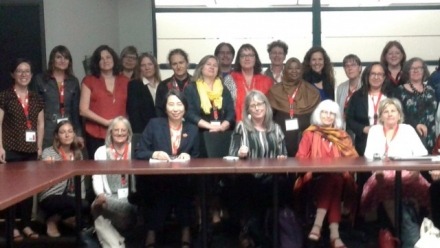
Dr Laura Rademaker represents Australia in Vancouver, Canada at the International Federation for Research in Women’s History AGM 2018 conference with ‘Dormitory Girls – Indigenous girlhood and sexuality in cross-crultural translation’ under Translating Agency: Gender, Sexuality, and Domesticity in Global Missionary Projects.
-
Language Acts and Worldmaking grant awarded to Project
The Deepening Histories Laureate Centre has been awarded a grant from the Languages Acts and Worldmaking project based at Kings College, London, for our upcoming symposium ‘Understanding the Deep Past across Languages and Culture’ on 27-28 September.
The grant is an international grant and is funded by the AHRC Open World Research initiative. More information can be found on their website – https://www.languageacts.org/
-
Australian Historical Association Annual Conference 2018
Date and time
Mon 02 Jul 2018, 11 AM – Fri 06 Jul 2018, 12 PMLocation
Copland Theatre, The Australian National UniversityIn 2018 the Australian Historical Association annual conference will be hosted by the School of History at the Australian National University. We are excited by the opportunity and look forward to welcoming you all to Canberra!
Please explore this website for information about the conference theme, keynote speakers, registration, accommodation, and more.
This conference has received financial support from the ANU College of Arts and Social Sciences, for which we are grateful.
Make new friends, catch up with old friends, cheer prize winners, get acquainted with the latest research and emerging scholarship – it will be five lively days of intellectual stimulation and collegiality!
-
Translation and mission history on Groote Eylandt by Dr Laura Rademaker
Date and time
Thu 14 Jun 2018, 5.15 PMLocation
Northern Territory Archives CentreSpeaker
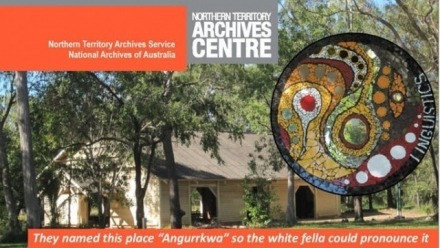
Dr Laura RademakerHow did language and the possible confusions of translation shape interactions between missionaries and Aboriginal people? This talk traces the story of Angurugu mission, focusing on its establishment by the Church Missionary Society in 1943 and missionary attempts to engage Aboriginal people through language. This includes themes of English literacy, bilingual education and Bible translation.
Language, and the ambiguities of translation in a cross-cultural situation presented Anindilyakwa people with opportunities to avoid or reinterpret missionary messages, as well as to cooperate in creative ways. Dr Laura Rademaker has been researching Northern Territory history for almost ten years. She is the author of Found in Translation: Many Meanings on a North Australian Mission. She is currently working on a history of the Tiwi Islands mission as well as a history of Australia’s ‘deep’ human past.
-
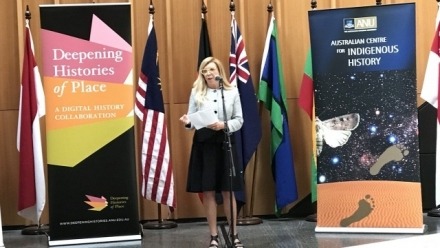
Launch of ‘Rediscovering the Deep Human Past’
Rediscovering the Deep Human Past Laureate Launched
Prof Ann McGrath’s new Kathleen Fitzpatrick Laureate programme was launched by Prof Raelene Francis, Dean of CASS, on 13th March. This project seeks to transform the scale and scope of history, incorporating Australian Indigenous epics about the ‘deep’ past with data from across the academic disciplines to tell a big picture history of Greater Australia.
Matilda House opened proceedings, welcoming Prof McGrath, her team and guests to her country and urging scholars to continue working with Aboriginal communities to understand Australia’s history.
Vice Chancellor, Brian Schmidt, introduced Prof Francis and spoke of ANU’s commitment to Aboriginal history and reconciliation and the value of ‘deep’ history for pressing concerns of today.
Prof Francis outlined Prof McGraths’s important contributions to Aboriginal history and how this project will push Australian history into new areas. She also welcomed and introduced the postdoctoral scholars working on the project, Dr Ben Silverstein and Dr Laura Rademaker.

Publications


All rights reserved ® Research Centre for Deep History, The School of History, The Australian National University | Built by Tabs.