-

Free online event: Kurrwa to Kartak: hand–made/held–ground with Professor Brenda L Croft
The First Nations Speaker Series is presented in collaboration with GML Heritage and the Research Centre for Deep History. Join us for the first session for 2022.
What: Kurrwa to Kartak: hand–made/held–ground with Professor Brenda L Croft
When: Thursday 3 March 2022, 12pm–1pm
Where: Free Online Event. The session will be recorded and made available after the event.
Register: Bookings are required, register for your free ticket here.
How can notions of home, community, and Country be represented within histories of both endurance and dislocation? At this event, Brenda L. Croft will present a Gurindji-specific historiography that engages with the pastoral impact on Gurindji Country from the late nineteenth century, the experience of Stolen Generations members and their descendants, and contemporary Gurindji experience into the 21st century.
These are themes represented at Still in my mind: Gurindji location, experience and visuality, a national touring exhibition Brenda has collaboratively curated with Gurindji family and community members, reflecting on events preceding and following the 1966 Walk-Off at Wave Hill Station that sparked the national land rights movement.

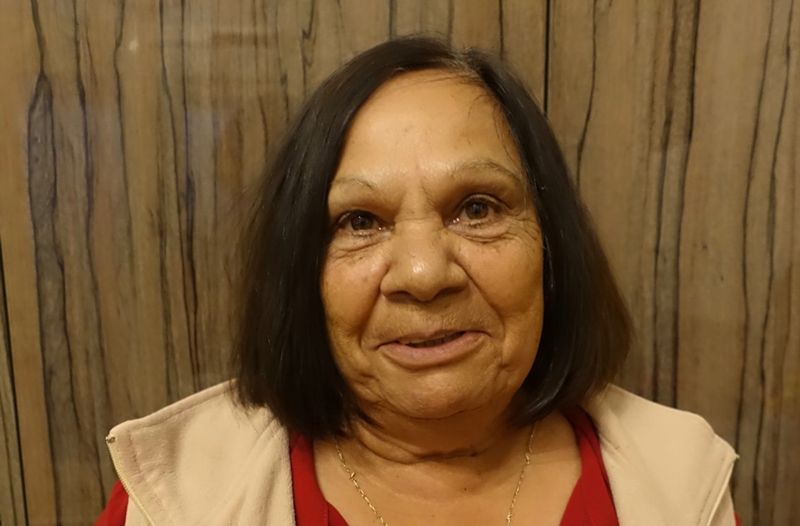
Photo of Professor Brenda L Croft. Professor Brenda L Croft is from the Gurindji/Malngin/Mudburra Peoples from the Victoria River region of the Northern Territory of Australia, and Anglo-Australian/ Chinese/German/Irish heritage. She has been involved in the Australian First Nations and broader contemporary arts and cultural sectors as a multi-disciplinary creative practitioner since the mid-1980s as an artist, consultant, curator, educator and researcher. She has received numerous regional, national and international awards, fellowships and residencies throughout her professional practice, and is extensively published nationally and internationally. Read here.
Register for this free event here. Attendees will be sent a link to the Zoom meeting after registering.
-
An Inspirational Leader: Mary June “Tookie” (Kelly) Pappin, Mutthi Mutthi elder, 21-6-1950 – 21-1-2022
Mary Pappin was a woman who inspired so many people. This Director’s Blog provides a chance to honour her contributions.
For me personally, Mary Pappin shaped so many years of my life and work. I find it hard to believe she’s gone from this present world. So much energy, fire and drive. A figure of authority and wisdom. The first time I met Mary was on an archaeological dig that she was supervising in the Willandra Lakes region. It was 2006, and she was wary – no doubt of another white academic certain to cause strife. She was even more sceptical of the camera crew that I brought with me, warning us off in no uncertain terms, saying she didn’t want another negative news story about her people. Once introduced by someone Mary trusted, however, she quickly switched into teaching mode, patiently sharing her knowledge and time.
Nonetheless, when academics interested in her people’s deep past infuriated her, she’d express this with furious theatricality. She objected to people referring to her ancestors as ‘the bones’, as ‘evidence’ or objects. And she became angry when the academics bickered with each other over dates. Yet she also made all visitors to her ancestral Country feel at home. That we were welcome on her Country. She was warm, kind and affectionate to so many researchers, treating them like part of her extended family.
On my third visit to Willandra Lakes, Mary expressed great satisfaction that I’d brought along my teenage daughter. When I added that she was mainly just sleeping in my car, she said it didn’t matter, for she would be imbued with the significance of her Country and she would know something of how very important this place is. ‘Even if she only gets a little bit now, it will stay with her as she grows older and she can share the message.’
Mary saw herself as part of a quick-changing line of successive generations – one that was indeed of short duration in the context of her own people’s long history of tens of thousands of years in this place. She saw her presence and actions on behalf of Country as primarily about passing on knowledge to the coming generations.
Mary sought education and job opportunities for the younger generation, and she welcomed opportunities to share her knowledge with the wider public. She participated in many interviews for libraries and websites. Articulate, smart, she always had something punchy and memorable to say. In the documentary Message from Mungo, Mary’s words provided a crystal clear message. She was political, fierce, canny, highly intelligent and eloquent. A powerful orator. She made her opinions felt and insisted on being heard. In recent months, she spoke out against plans to rebury the ancient Mungo remains in anonymous secret sites. Mary renewed her long efforts for a Keeping Place for which she and the Mutthi Mutthi, Ngaampa and Barkintji elders had lobbied so hard over for decades.
Mary was a visionary, carrying on the determined work of her revered mother Alice Kelly, plus of so many impressive generations past. She epitomized courage.
Mary continued the Mungo/Willandra Lakes story – one of powerful women leaders, Indigenous and non-Indigenous, including that of her mother Alice Kelly and archaeologist Isabel McBryde. Mary Pappin’s children have also made their mark – as National Parks managers and researchers, as cultural knowledge holders and custodians.
The last time I saw Mary was in early 2021. We met up in an old woolshed at the Buronga Botanical gardens, in order to show her the results of the Mungo map that we had all been working on with Kim Mahood and our Research Centre.

L-R Daniel Kelly, Mary Pappin and Ann McGrath, Magenta Wool Shed, Australian Inland Botanic Gardens, Buronga, 5 March 2021 Take a look at that photo. Mary understood visuals; she commanded the camera. Willandra Lakes, burial place of Lady Mungo, who she so admired and wished to protect, is in clear view.
Mary’s hand connects with the map of Country. It gestures towards Balranald, a special place for the Kelly family. And the place where she was to pass away.
A generation is starting to leave us, but the young ones have been well taught. They are coming through. And thanks for the courage and strength of women like Mary Pappin, they have a wonderful legacy to work with.
**
We offer our sincere condolences to her husband Darryl (Joe) and her children Darryl, Jason, Gary, Bernadette, Verna, Mary and Douglas.
A funeral was held at St Dympnas Catholic Church Swan Hill and a burial was held on Tuesday, February 1st 2022 at the Balranald Aboriginal Cemetery, where her mother Alice is also buried.
-
Major Laureate Outcome from Harvard Collaboration: Special Issue on ‘Deep Historicities’ Published
This month, a special issue of Interventions: International Journal of Postcolonial Studies themed on ‘Deep Historicities’ has been published featuring the work of multiple members of the Centre. The publication emerges from a symposium held at Harvard University in April 2019, co-convened by Laura Rademaker, Ben Silverstein (both Postdoctoral Fellows on the Laureate Program) and Daniel Lord Smail of the Harvard History Department.
The collection represents different ways of imagining and understanding deep pasts across culture and discipline, attending to the specificities of both Indigenous knowledges as well as knowledges produced by deep historians, archaeologists, and anthropologists. In the title article, Laura Rademaker and Ben Silverstein seek to understand the deep past, the knowledges of First Nations peoples and of the various academic disciplines that can seem incommensurable.
In addition to contributions from Ben Silverstein and Laura Rademaker who also edited the issue are papers by Julia Rodriguez, Ann McGrath, and Gustavo Verdesio, and a response from Daniel Lord Smail. In People of the Footprints: Rediscovery, Indigenous Historicities and the Science of Deep Time, Centre Director Ann McGrath uses a case study from one of Australia’s most significant deep history sites to show how reconciliatory efforts to share the western scientific kudos attached to discovery narratives have proved an uncomfortable fit with Indigenous cultural values.

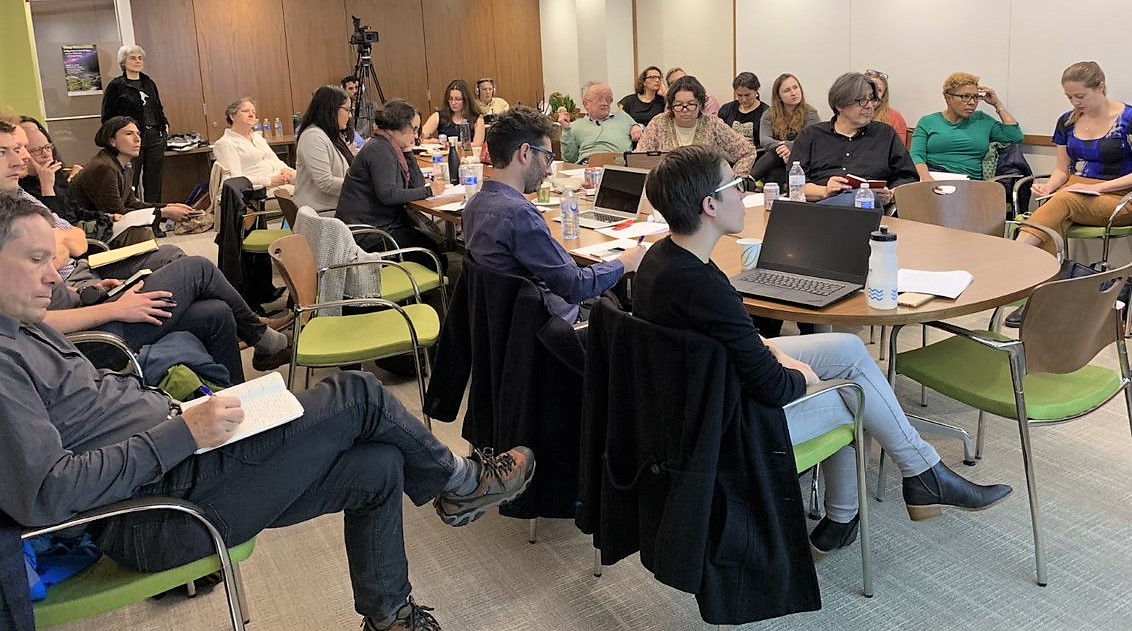
Winding down after the Symposium on Deep Historicities: L-R Daniel Lord Smail, Ann McGrath, Leah Lui-Chivizhe, Emma Kowal, Laura Rademaker, Aileen Marwung Walsh, Ben Silverstein. Read: International Journal of Postcolonial Studies Volume 24, 2022 – Issue 2: ‘Deep Historicities’.
The Centre for Deep History would like to thank our symposium partners: The Initiative for the Science of the Human Past at Harvard, Harvard University Department of History, Weatherhead Center for International Affairs, ARC Laureate Program on Rediscovering the Deep Human Past, ANU Global Partnership Scheme, Harvard University Center for African Studies and the Harvard Committee for Australian Studies.

Symposium flyer. -
Prestigious Research Award for Dr Laura Rademaker
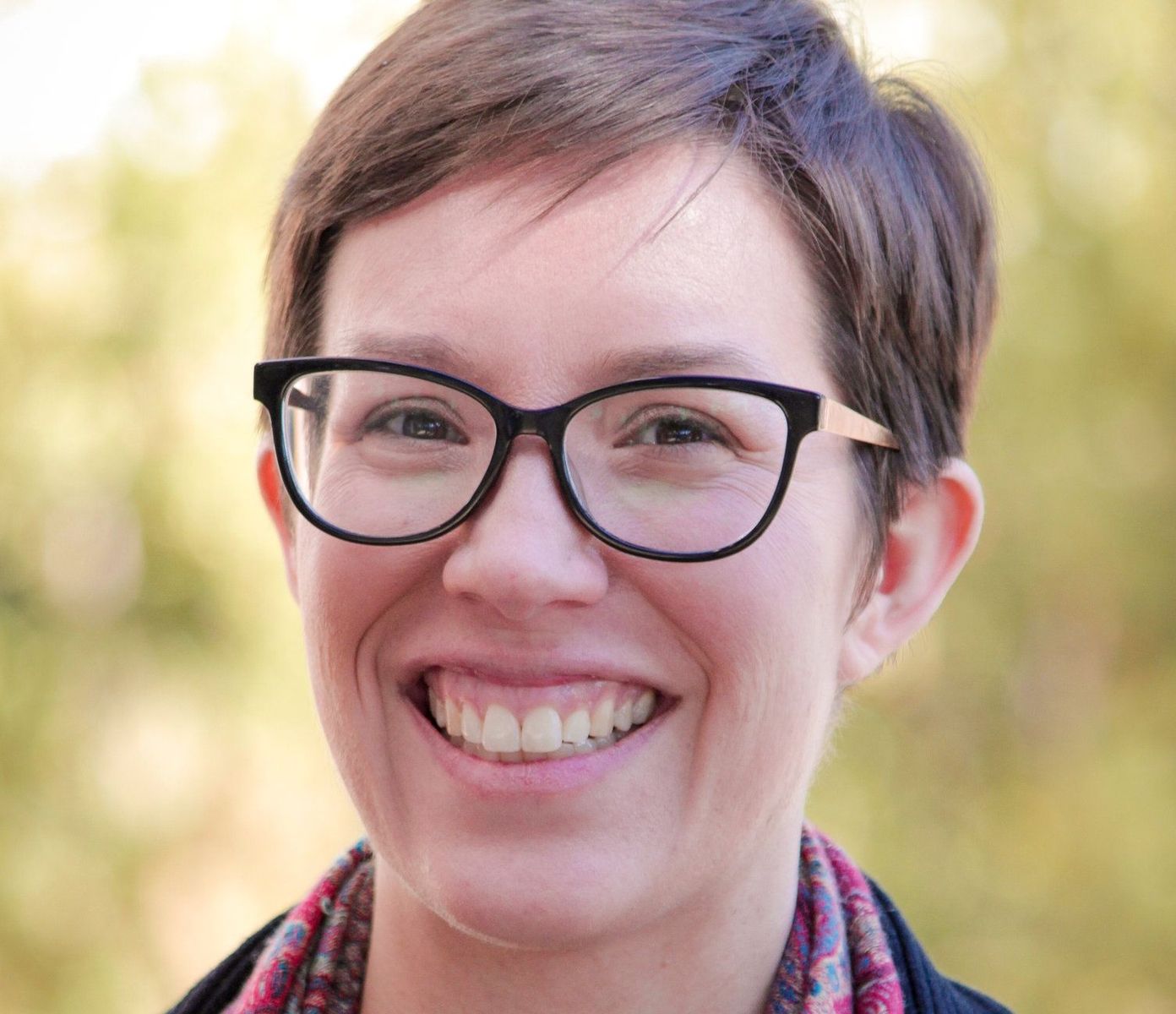
Laura has recently been named as one of four recipients of the Academy of the Social Sciences in Australia’s 2021 Paul Bourke Awards for Early Career Research. The ASSA acknowledges Laura as ‘a leading historian of Indigenous Australia, with an outstanding research record encompassing religious, gender and deep history.’ They recognise her distinctive historical practice, based on the extensive use of oral history and detailed archival research, and in close collaboration with Indigenous communities.
Laura says ‘Indigenous history has so many insights to offer us’; I am ‘passionate about collaborative history…to gain new insights about Australia’s past.’ She explains that she involves communities in the design of the research, the research process and the creation and dissemination of research output. She is most grateful to the communities that have supported her in her research in West Arnhem, Groote Eylandt and the Tiwi Islands. Laura encourages people not to be intimidated by Australia’s complex past, but to give it the attention that it deserves.
Professor Ann McGrath states: ‘It was an honour to nominate Laura for this award. She embraces opportunities, and takes on research challenges in a rigorous and professional manner. Her latest work on temporality and rock art will provide important ways to appreciate Australia’s deep history and its tellings.’
-
Working with Indigenous Cultural and Intellectual Property: An Introduction to the True Tracks ICIP Protocols, Terri Janke
Working with Indigenous Cultural and Intellectual Property: An Introduction to the True Tracks ICIP Protocols, Terri Janke
Join special guest speaker, Terri Janke, at the First Nations Speaker Series. The talk will be held online and in person on Gadigal Country, The Mint (Gold Melting Room), Sydney on 9th December, 6-7pm.
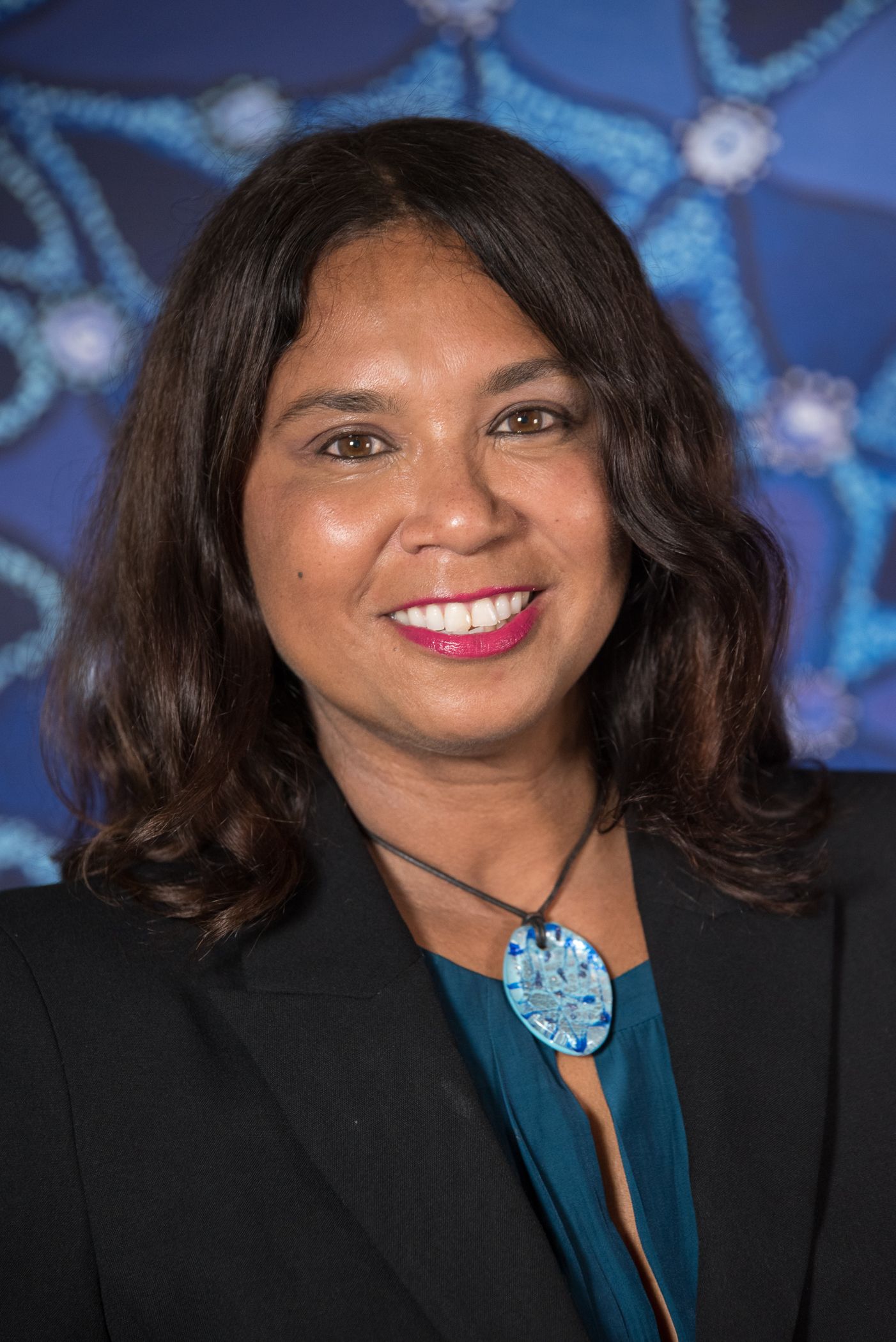
Terri Janke is a Wuthathi/Meriam woman and international authority on Indigenous Cultural and Intellectual Property (ICIP). In 2000, she set up the award-winning legal firm Terri Janke and Company which today has a broad and diverse client base including Indigenous and non-Indigenous creatives, entrepreneurs, businesses and government departments. The firm specialises in Commercial Law and leads the way in ICIP protocols and Indigenous engagement for various sectors including the arts, museums and galleries, film and business. Terri is also an author of fiction and non-fiction, her most recent book True Tracks: Respecting Indigenous knowledge and culture came out in 2021.
When: 9 December, 6-7pm
Where: Online – Register here to attend online
Where: In person – Limited seating is available at The Mint, Sydney. Register here to attend in person.
-
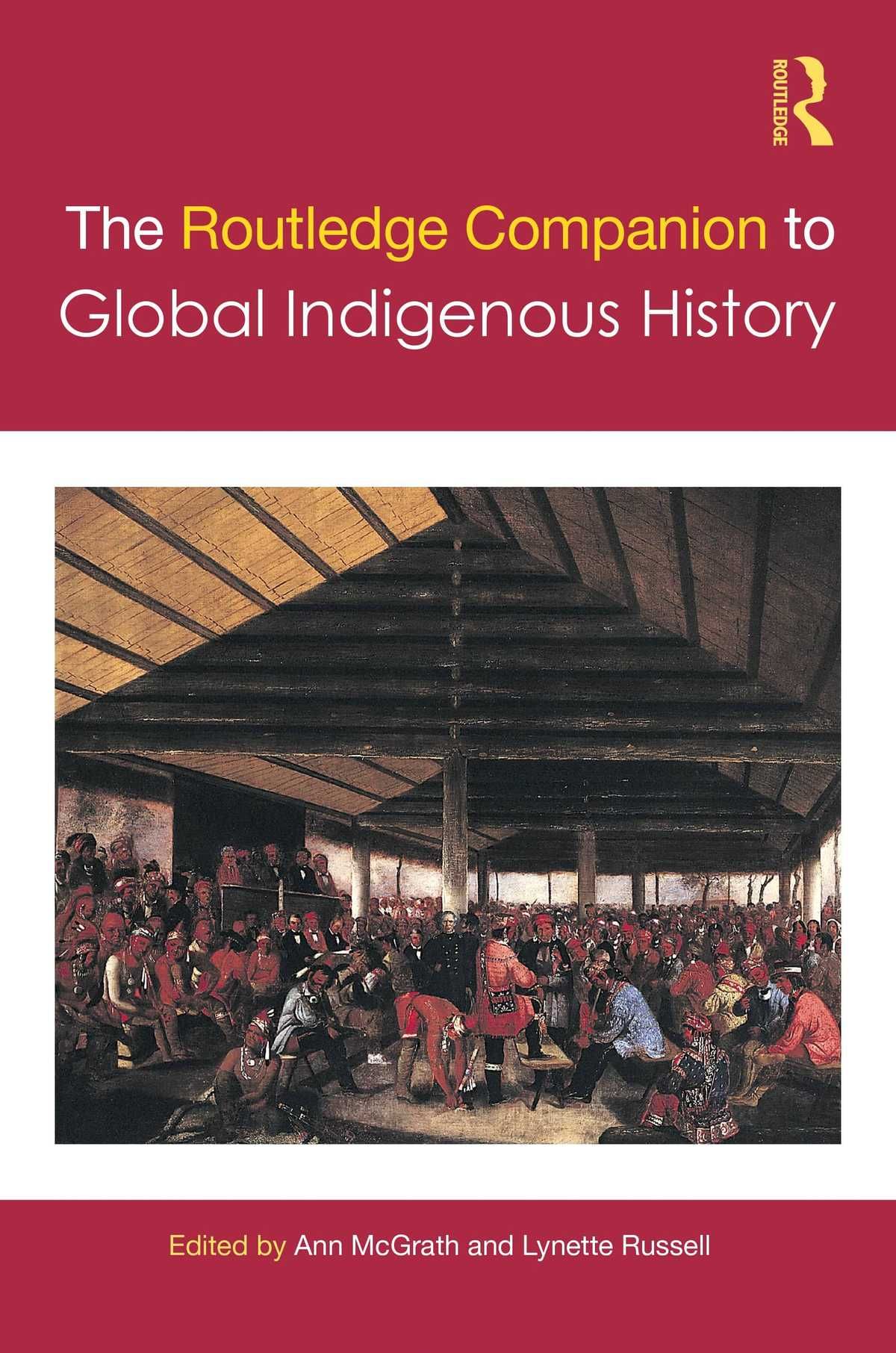
Why do First Nations people continue to be history’s outsiders?
In their recent article in the Conversation, Ann McGrath and Lynette Russell raise the question “Why have Indigenous peoples become History’s outsiders?”. Their newly published volume The Routledge Companion to Indigenous Global History demonstrates how Indigenous cultures the world over had their own methods of maintaining History – story telling, art, ritual, dance and song – which many cultures still practice today. The book features contributors, both Indigenous and settler, across the several geographical locations, including Africa, Asia, Australia, Northern Europe and the Americas. As they explain, “The history of the deep pasts and modern presents of Indigenous peoples is the story of peoples who are the custodians of the planet upon which we all live. They have left, and continue to leave profound legacies”. As well as occupying much of the planet, their stories contain deep-time histories beyond the discipline’s usual periodizations. Watch this space for some local and international events to mark the launch of this important volume.
Read more via the links.
-
Articulating Sydney’s Aboriginal Past in the Public Realm
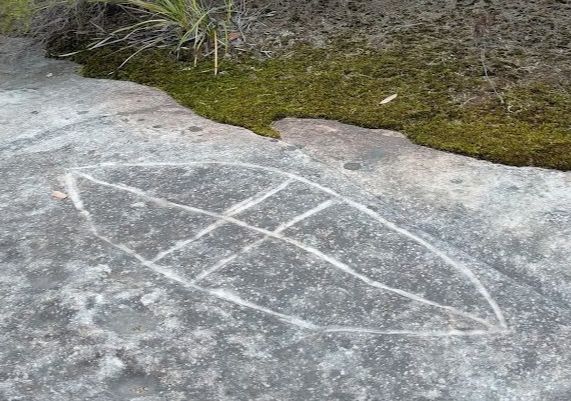
In October, Matt Poll, Manager of Indigenous Programs at the Australian National Maritime Museum, spoke on Sydney’s Aboriginal history as part of the First Nations Speaker Series. This series, which began as a collaboration between GML Heritage and the ANU Research Centre for Deep History, now also involves Sydney Living Museums who hosted the presentation in the Gold Melting Room at the NSW Mint. In his talk, Poll painted a picture of Sydney’s deep human history and heritage across several thousand years, and illustrated that these rich and diverse cultural expressions are not so much relics of the deep past but are alive today.
The material traces of First Nations peoples are everywhere around the city, including the thousands of rock art sites, some of which include several hundred motifs and extend back over many tens of thousands of years. This, Poll told us, makes the east coast of Australia an extensive and extraordinary outdoor art gallery. Yet, making meaning of this gallery requires interpretive work. The expertise of First Nations Elders, artists, researchers, and archaeologists is needed to help develop a fuller, equitable and more accurate sense of Sydney and Australia’s history.
As Poll highlighted, while these tangible traces hold different meanings for different people, meaning can be understood more broadly. Quoting Yirrkala artist and leader, Wandjuk Marika on the sandstone engravings in Ku-Ring-Gai Chase national park, Poll said: ‘There is no-one who can properly say why this whale or that boomerang was carved in the rock, or whether his whale is a natural whale or a supernatural whale, or even whether this shape was meant to signify any kind of whale at all. All that the living can be absolutely sure of is that the stone records were made because certain knowledge inspired their creation at different times. They became a source of inspiration themselves, and now they inspire peoples unknown to the artists and even undreamt by them.’ By discerning the broad inspiration of the original artists many thousands ago, the engravings can be understood as representing a deep and enduring knowledge of, and connection to, Country. Today, people can connect with knowledge and culture, like the artists before them, by working with the engravings, reproducing them, transforming them, and through that practice, engaging Country itself .
For many in the audience, Poll’s compelling talk illuminated the breadth of projects that are articulating Sydney’s Aboriginal past in the public realm. Using a range of case studies, he presented the diverse approaches First Nations artists and researchers are taking to incorporate these pasts into cultural institutions. This includes Gadigal elder Charles Madden’s work in adopting motifs found in rock engravings and inscribing them on shields, transposing them into contemporary art objects now held at the Australian Museum. This process involved working through protocols of access and permission to select and work with bark and colour, demonstrating a reclamation and reimagining of rock art motifs.
Similarly, Waanyi artist Judy Watson’s planned installation of a monument titled Bara takes the well-worked shape and design of a Sydney-region fish-hook and translates it into marble. This is not just a transformation of form, but also speaks to the knowledge with which this material trace of history can be understood. Through translating an object found in shell middens—otherwise classified as an artefact for archaeologists to work with—into a public art project, Watson is creating a monument to the Eora that will inscribe Dubbagullee/Bennelong Point as a place of gathering and abundance that recognises the deep connection of Gadigal people to Country.
These artistic practices are developed through a range of creative engagements with Country, with cultural knowledges, and with deep history and heritage. Poll described them as translations and as interpretations and re-creations of places and objects. This conveys an important sense of the way they work by translating both the past and the knowledges that represent and connect that past with the present, bridging the conceptual gulf between the deep past and the present and working to reimagine dominant narratives. These transposed and translated histories and heritages do not just add to knowledge, but rather transform the terms of our historical knowledge. The artistic works Poll shared with us are not, in other words, translations that render Indigenous knowledges transparently available to non-Indigenous people; rather they are engagements that generate and expand spaces of cultural potential.
Translation here is a bridge between cultures or languages, expressing that bridge as a site of meaning-making on a continuum of transformations. It does not convey or define original meaning, as Wandjuk Marika cautioned against above. It rather offers a glimpse of a new or different world. The First Nations artistic works that Poll described, each of which references and works with traces from the past, are engagements with Country that ‘re-energise’ and ‘re-awaken’ the Sydney landscape and create ‘social spaces where the Aboriginal past is activated and brought into the present’. This has something to offer us all.
-

Deep Conversations Space, Time Stories
Outer space has long beckoned, offering stargazers insights into new worlds, riches, and discoveries both on and beyond our home planet. This conversation brings together the insights of archaeology, international law, history, astrophysics and Indigenous knowledges to find new ways of narrating the universe beyond our planet.
Join Alice Gorman, Tristan Moss, Cassandra Steer and Pete Swanton as they reflect on the past, present and possible of storying the skies.
Deep conversations: history, environment, science series is a partnership of the Research Centre for Deep History and Centre for Environmental History. It aims to bring together scholars from diverse disciplines to discuss questions of history, science and the environment, and how they shed light on the global challenges we face today.
Speakers
- Associate Professor Alice Gorman, Flinders University
- Dr Tristan Moss, Griffith Asia Institute, Griffith University
- Dr Cassandra Steer, College of Law, Australian National University
- Peter Swanton, Research School of Astronomy, Australian National University
Co-Chairs
- Dr Laura Rademaker, Australian National University
- Associate Professor Ruth Morgan, Australian National University
Time: 12:00 -1:30 pm
Date: Thursday 4, November
This webinar will be conducted via Zoom. Please copy the link below into your browser.
https://anu.zoom.us/j/84525494837?pwd=SjFOVXEyUEMvSmZRNVBHWkV5Slh3QT09For more information contact the convenors of the series laura.rademaker@anu.edu.au or ruth.morgan@anu.edu.au.
-
Returns and Reconnections Seminar Series
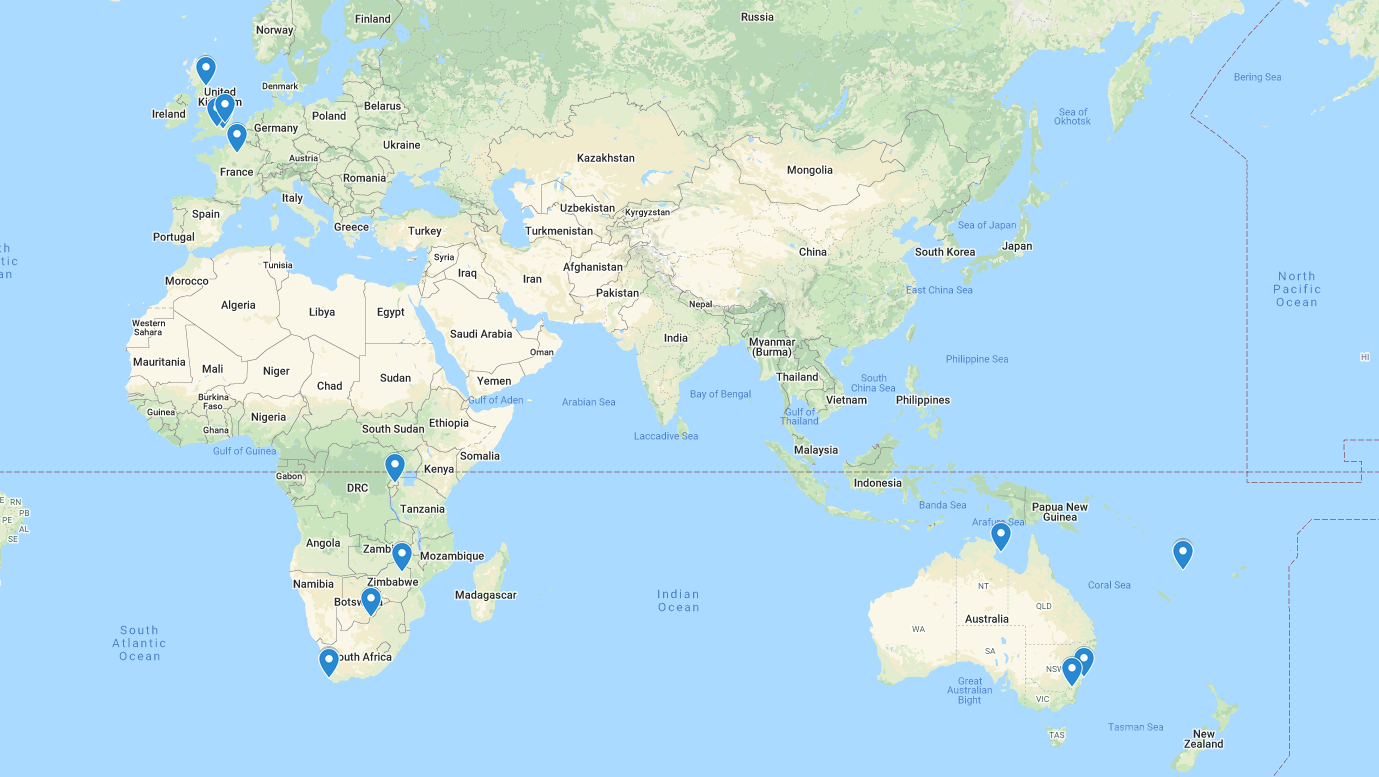
Over three days in September 2021 the Research Centre for Deep History (Australian National University) and the McDonald Institute for Archaeological Research (University of Cambridge) convened the three-part Returns and Reconnections Seminar Series.
The series brought together scholars from a range of disciplines and fields of study who are engaging with the deep past through research collaborations with and alongside Indigenous and local communities. The seminars advanced new conversations about the nature of these collaborations, collectively thinking through the role of archives and collections in engagements with the deep past, considering what it means for communities to return to the knowledge and material traces of their ancestors, and elaborating some of the diverse meanings of deep time and deep history across different spaces, disciplines, and temporalities.
The series was opened on 20 September by Professor Ann McGrath, Director of the Research Centre for Deep History. Seven papers were delivered across the three dates (20, 21, 27 September) with presenters and co-authors from Australia, Vanuatu, South Africa, Botswana, Zimbabwe, Rwanda, France, England, and Scotland. Comments on each paper from invited respondents were then followed by extended discussion with the 35-40 attendees at each session, with the final seminar on 27 September concluding with a drawing together of key themes from Professor McGrath and Dr Catherine Namono (University of the Witwatersrand).
A number of cross-cutting themes emerged, including the challenges of navigating relationships between local knowledges and broader disciplinary or institutional structures; the right to interpretation (or reinterpretation) as a way of connecting with the past; the value of community partnerships and co-production; the complex ethical considerations involved when working across cultures and communities; and the necessity for Indigenous and local peoples not just to have access to artefacts and knowledge, but to have a position from which to speak.
Series convenors Ben Silverstein and Mike Jones (ANU), and Paul Lane (University of Cambridge) are now exploring publication options for the papers featured, and may also convene additional seminars to continue the conversations started by Returns and Reconnections. The seminar series is another important milestone in the Research Centre for Deep History’s ongoing commitment to building productive collaborative relationships with scholars in our region, and around the world.
-
Articulating Sydney’s Aboriginal Past in the Public Realm, with Matt Poll
Wednesday 13 October 2021, 4–5pm
Join us for the next talk in the First Nations Speaker Series, a collaboration between the Research Centre for Deep History, GML Heritage, and Sydney Living Museums.
Register to join the online talk and learn more.
Along Australia’s east coast, Greater Sydney is unique, with over 800 known Aboriginal rock engraving sites recorded across Ku-ring-gai Chase National Park alone, each containing multiple motifs and designs denoting a rich artistic vocabulary. Being one of the largest outdoor Aboriginal art sites remaining on the east coast of Australia, Sydney rock engraving galleries are a testament to the rich artistic tradition of the Aboriginal cultural landscape. This heritage stands as a signpost of the role of public art as a teaching and learning tool. Cultural revitalisation projects using knowledge gleaned from a myriad of historical sources present challenges for Sydney’s Aboriginal community when rearticulating these forms of knowledge today.

Hybrid amorphous rock engraving at Ku-ring-gai Chase National park How do artists and community representatives work with commissioning agencies to develop authentic and ethical interpretation of historical knowledge regarding Aboriginal Sydney’s lands, waters and skies? The imperative of authenticity against artistic adaptation is increasingly at the intersection of developing a new language incorporated into Sydney’s architecture, landmarks and social spaces. As some arts practices and historical knowledge evolve into large-scale commercial enterprise, the importance of protecting cultural intellectual property involves deeper communication between historians, community representatives, artists and academics.
In this presentation Matt Poll will reflect on new additions, and historically significant examples of where consulting with Sydney’s Aboriginal and Torres Strait Island communities’ representatives has built consultation frameworks and templates for increasing the visibility of Sydney’s Aboriginal past into future place-based projects in Sydney’s built environment.

Matt Poll. Matt Poll is the newly appointed manager of Indigenous programs at the Australian National Maritime Museum.

Publications


All rights reserved ® Research Centre for Deep History, The School of History, The Australian National University | Built by Tabs.