-
History of Indigenous work sheds light on Australian slavery
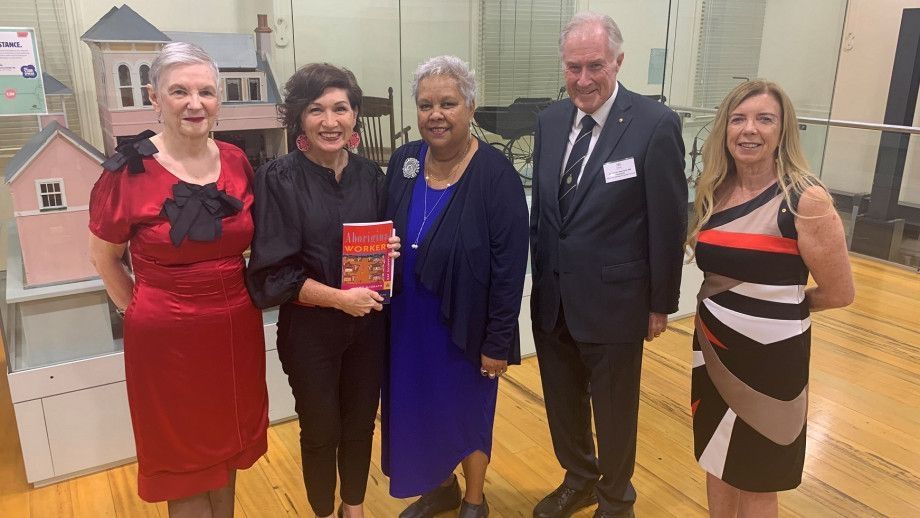
The exploitation of Indigenous Australian workers offers powerful insights into Australia’s history of slavery, as well as the Black Lives Matter movement and deaths in custody, leading experts from The Australian National University (ANU) say.
The researchers have re-released their seminal book Aboriginal Workers, 25 years after it was first published in light of the global movement and the 30th anniversary of the Royal Commission into Black Deaths in Custody.
Co-author Professor Ann McGrath from ANU said the Black Lives Matter movement had raised many similar issues still faced by Indigenous Australians today.
“For Indigenous Australians, the BLM movement resonates powerfully. They share a history of labour exploitation and oppression, as well as racism based on their skin colour,” Professor McGrath said.
“That’s why we have decided to re-release Aboriginal Workers.
“This book was ahead of its time in many ways. It enhances our understanding of Australia’s history of slavery, showing that historical revelations remain deeply informative.
“This history is especially relevant when you consider this is the 30th anniversary of the Royal Commission into Black Deaths in Custody, and yet the statistics are only getting worse.
“You can’t understand such pressing social matters unless you understand what happened to Aboriginal people throughout Australian history.”
Aboriginal Workers brings together insights from leading researchers on the history of Aboriginal and Torres Strait Islander labour, including Bidjara/Birri Gubba Juru woman Dr Jackie Huggins.
Dr Huggins’ articles focus on her own career, as well as the experiences of her mother, Rita Huggins.
“In answer to the recent denial that there was slavery in Australia – my mother and her 13 siblings were slaves who worked in domestic service and stockwork,” Dr Huggins said.
According to the editors, the volume was “pioneering” in this focus on Indigenous women and girls in the workforce.
We wanted to demonstrate the many roles in which Aboriginal men and women had worked, drawing attention to the way their labour and their payments were controlled by the state,” Professor McGrath said.
“The conversation has certainly changed since 1995. But we hope this reissue will highlight the fact that the history of slavery very much pertains to Aboriginal Australians.
“There’s still pressing questions around the long-term impacts of forced labour, and how to integrate Aboriginal history into the global conversation around slavery.”
Queensland Minister for the Arts and proud Quandamooka woman Leeanne Enoch, who was the first Aboriginal woman elected into Queensland Parliament, said Aboriginal Workers highlights the need for truth telling and the importance of Aboriginal workers and their contribution to this state.
“Our unique stories give us a platform to connect with others and activate positive and meaningful change across our society,” Minister Enoch said.
“Now more than ever our stories need to be told, recognising that the power of words lead to that meaningful change.
“We need a fearless commitment to telling the truth of our shared past, the sometimes ugly, uncomfortable, hard to talk about truth and written stories, such as Aboriginal Workers, are essential on this path to truth telling.”
-

Event: Ongoing responsibilities’ and finding answers
GML Heritage and the Research Centre for Deep History are pleased to announce their collaborative event series, ‘First Nations Speaker Series’. The series creates space for a range of Aboriginal and Torres Strait Islander community members to talk about history, heritage and culture.
Dr Charlotte Feakins of GML and a collaborating scholar of RCDH, and Dr Ben Silverstein of RCDH are co-convenors of this innovative series which highlights the potential for collaborations across institutions to engage with public history and heritage in the context of deep history and Indigenous histories.
The first event features Dr Leah Lui-Chivizhe, who will present ‘Ongoing Responsibilities and Finding Answers’ online via Zoom. Dr Lui-Chivizhe is a postdoctoral fellow in history at the University of Sydney, and is a Collaborating Scholar at the Research Centre for Deep History.
‘Ongoing Responsibilities and Finding Answers’ is a talk about the challenges of working with collections gathered during colonisation—specifically ancestral remains—and the unresolved issues that this creates for First Nations people. Guests will have the chance to reflect and discuss this deeply important issue.
When: Thursday 13 May 2021.
Time: 6.00pm-7.30pm.
How to Book: Bookings are required, and attendees will be sent a link to the Zoom meeting after registering. Please reserve your spot here.
The session will be recorded and made available after the event.
-
Review of Nuclear Histories
In the second of the ANU’s Deep Conversations Series, co-organised by the Research Centre for Deep History and Research Centre of Environmental History, speakers and participants were encouraged to consider how the atom shapes the past. If you missed the webinar its now available on our youtube studio.
Invited to speak were two historians (Professor Heather Goodall and Jess Urwin) and two scientists (Dr Julia Carpenter and Dr Filomena Floriana Salvemini), all of whom centre the nuclear in their work. The ensuing discussion was colourful, multifaceted, and (oftentimes) surprising, encapsulating the various nuances that characterise the ways that the nuclear has shaped, continues to shape and is shaped by the past.
Beginning the conversation in our own backyard, Professor Heather Goodall discussed the British nuclear tests in Australia with expertise reserved for those researchers intimately involved in investigating the tests during the 1980s. Joined spontaneously by audience-member and fellow Royal Commission researcher Professor Maggie Brady, Professor Goodall reminded us all that it is not the tangible danger of the nuclear that shaped (and continues to shape) its relationships to Aboriginal communities and others, but rather its perceived danger.
The image of nuclear contaminants rolling across the desert in a cloud, or leaching into groundwater, mutating plants and animals, and ultimately making their way into vulnerable bodies remains predominant. It is upon this characterisation of the nuclear that the historiography (in Australia in particular) is predicated. But Professor Goodall, as well as traditional owners of the Maralinga Tjarutja Lands, continue to remind us that the effects of the nuclear expand beyond irradiation. Dislocation and disease, brought by colonialism, are also processes inherent to the history of the nuclear.
This was a theme I wanted to consider in my own contribution to the conversation. As historian Gabrielle Hecht has argued, the Nuclear Age is so often considered a vital historical ‘rupture’ point. The 1940s is popularly believed to have witnessed the explosion of a new historical and scientific epoch defined by the nuclear. I encouraged participants to consider the ways that the nuclear belongs to the colonial period, enabled by exploration, discovery and Aboriginal labour. Integral to this is engagement with Aboriginal stories of the nuclear, examples of which have been recorded in several instances over many decades. In discussing these points, I attempted to offer a problematisation of the historical periodisation of the nuclear while considering the question of whether the nuclear is as unique as history would have us believe.
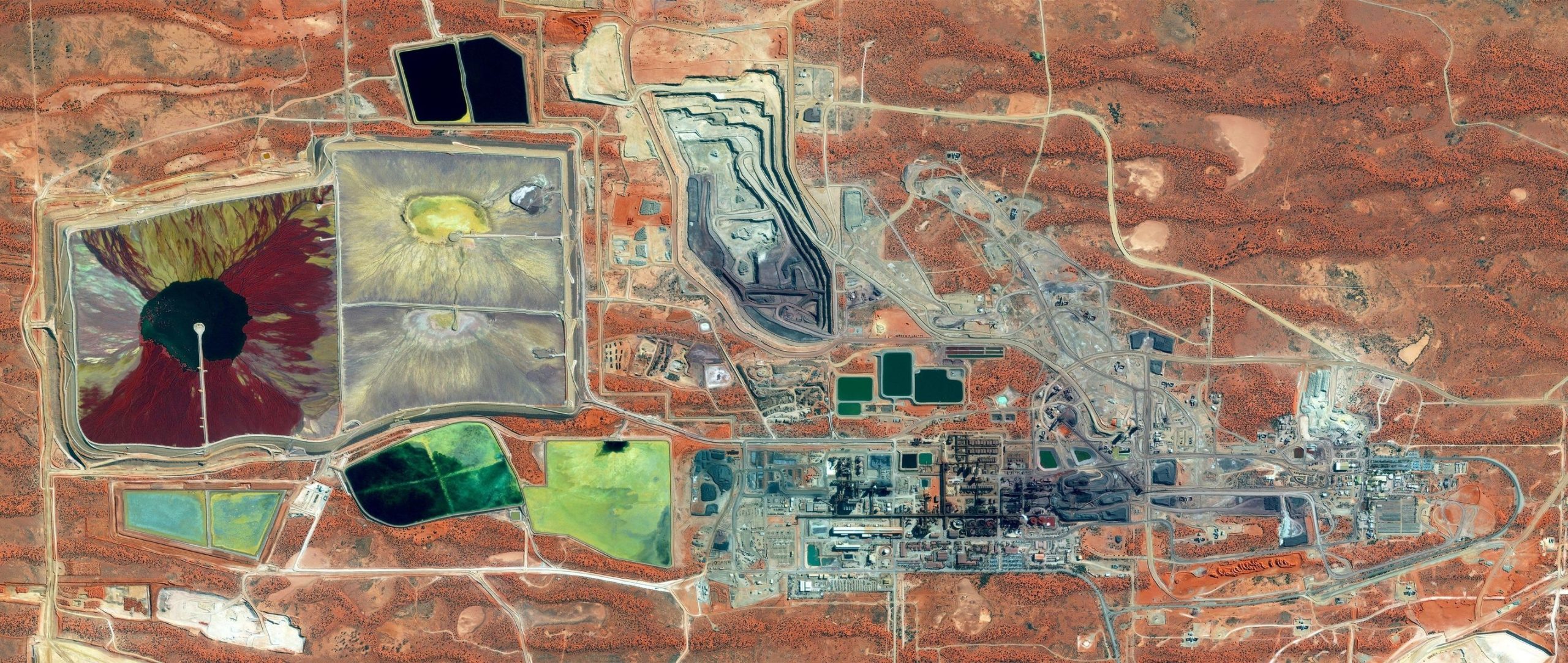
Dr Julia Carpenter of the Australian Radiation Protection and Nuclear Safety Agency alluded to a similar question by drawing upon her experiences in rehabilitating former nuclear sites across Australia. She used Rum Jungle in the Northern Territory as just one example. The use of toxic heavy metals in mining is of the greatest environmental concern at Rum Jungle, yet it is the nuclear that remains predominant in discussions of environmental contamination and clean-up.The perception of the nuclear as an industry with overwhelmingly disastrous environmental and human consequences has worked to overwrite the harm created by other toxic industries and more nuanced results of colonialism. Further to this, such emphasis overlooks the triumph of Indigenous groups the world over in not only surviving nuclear processes but engaging with and triumphing over them. Condemnatory narratives about the nuclear obfuscate its more positive interactions.
Australia’s Nuclear Science and Technology Organisation (ANSTO), Dr Filomena Floriana Salvemini explained, utilises the atom to unearth the past. ANSTO is vitally contributing to heritage preservation through the use of nuclear-beam technologies. While historical narratives of the nuclear remain – for the most part – preoccupied by its ability to contaminate and colonise, Dr Salvemini’s contribution to the conversation shone a light on the ways that nuclear technology can interrogate items of historical importance in a non-invasive way.
Concluding the conversation with this insight provided an entirely different interpretation of the ways in which the atom shapes the past. Not only has the atom shaped the past by virtue of the processes it has enabled, the power it can harbour and the contaminants it can leave behind, the atom can vitally unveil the past, both literally and figuratively.Considering how the atom shapes the past provides valuable insight into the ebbs and flows of history, unveiling stories ripe with contradictions, complications, and contamination, but also narratives of triumph and hope.
-
Research Leadership Program
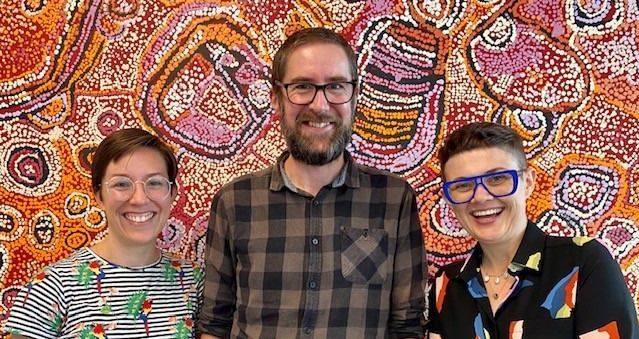
Following an application and interview process, Ruth Morgan (Collaborating Scholar), Laura Rademaker (Deputy Director), and Mike Jones (Postdoctoral Research Fellow) have all been accepted into the College of Arts and Social Sciences’ inaugural Research Leadership Program (RLP).
The RLP is a new initiative that will build and enhance research excellence and leadership within the College. It aims to assist individual researchers build competitive research profiles and funding applications in highly competitive funding contexts; and to recognise and enhance the capacity of researchers to provide peer-to-peer mentoring and to identify and deliver research excellence and leadership, both within and outside of their own discipline context.
The program gets underway in April 2021. Ruth, Laura, and Mike are looking forward to meeting the rest of the cohort and building their skills over the coming year.
-
Deputy Director Laura Rademaker visits NT communities
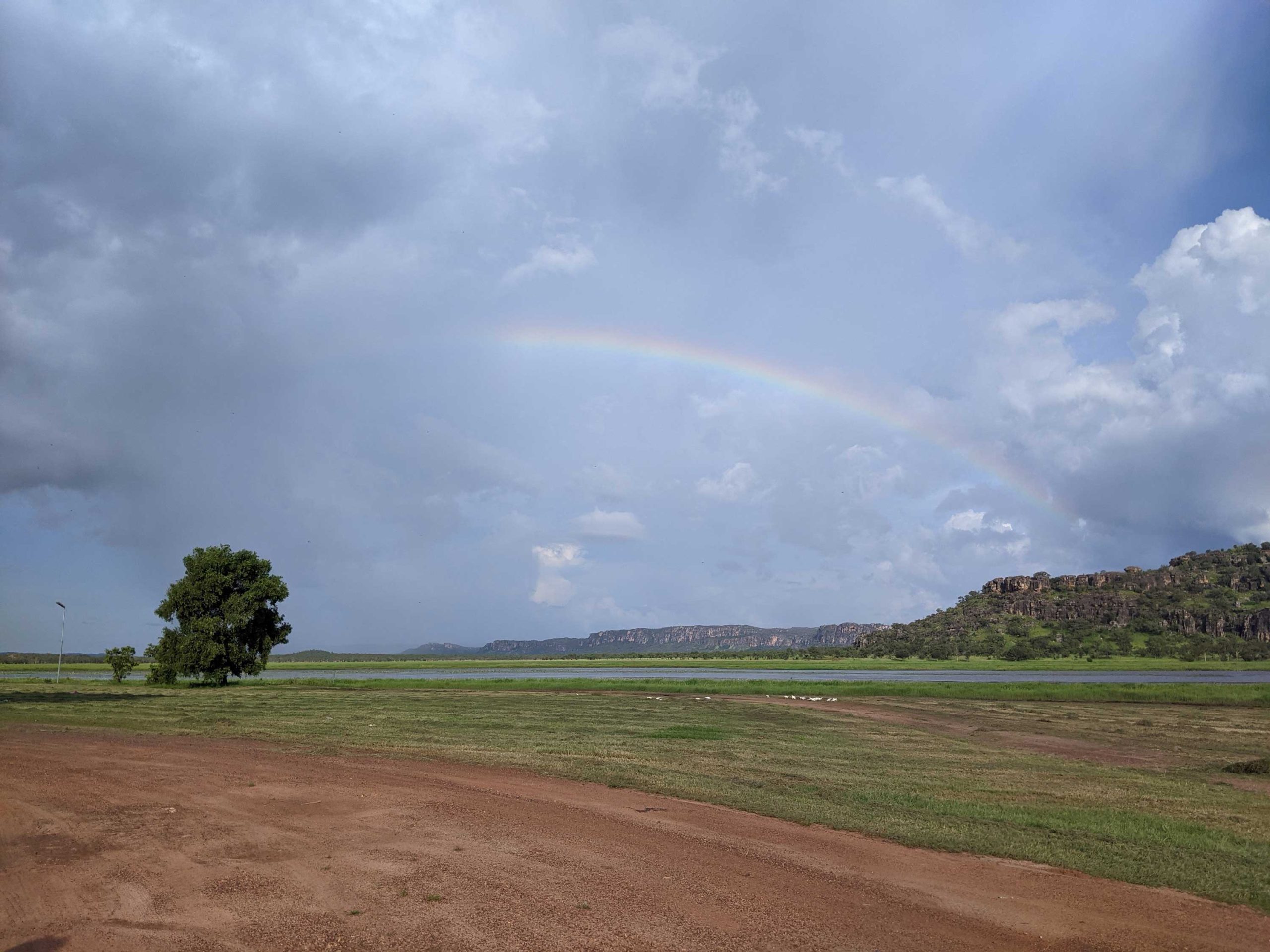
Laura Rademaker recently visited communities in Gunbalanya, Darwin and Jabiru to talk about on Country research plans. She spoke with the communities about rock art and deep history, and possible collaborations in the Research Centre’s digital atlas, which is in a stage of conceptual exploration, refinement and development at an increasing rate.
While in Gunbalanya, the official celebration event of the publication of ‘Bible in Buffalo Country’ by Laura Rademaker, Sally May, Donna Nadjamerrek and Julie Narndal, in partnership with Injalak Arts, was greatly enjoyed by all involved. The celebration was appropriately held at the Injalak Arts Centre.

Sally, Laura, and Julie Mumurdul Narnal 
Laura talking with Gabriel Maralngurra -
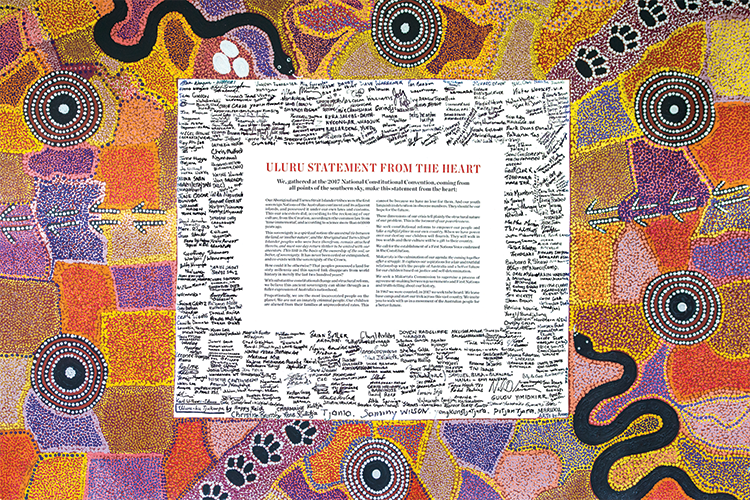
Deep history and the Senate Committee Inquiry into nationhood, national identity and democracy
-
Nuclear histories: How the atom shapes the past
Australia is home to abundant uranium and thorium reserves, the radioactive heavy metals that fuel nuclear reactors, arm militaries, and contribute to the production of radioisotopes for medical and imaging uses. These latter uses offer new insights into the past that were previously impossible to discern. The extraction and uses of Australia’s uranium and thorium reserves have transformed understandings of Australia’s deep human past, but also have immediate and long-term consequences for local communities and landscapes. In this Deep Conversation, we reflect on just how the
atom shapes and shares our histories as well as its lasting human and environmental legacies in the twenty-first century.Time: 12:00 – 1:30 PM, Tuesday 2nd March
Deep conversations: history, environment, science series is a partnership of the Research Centre for Environmental History. It aims to bring together scholars from diverse disciplines to discuss questions of history, science and the environment, and how they shed light on the global hallenges we face today.
Speakers
- Professor Heather Goodall, University of Technology Sydney
- Dr Filomena Floriana Salvemini, Australia’s Nuclear Science and Technology Organisation
- Dr Julia Carpenter, Australian Radiation Protection and Nuclear Safety Agency
- Jess Urwin, Australian National University
Co-chairs
- Dr Laura Rademaker, Australian National University
- Associate Professor Ruth Morgan, Australian National University
-
Eaglehawk and Crow: Aboriginal knowledges, imperial networks and the evolution of religion
Deputy Director Laura Rademaker recently published this article in Journal of Colonialism and Colonial history. In ‘Eaglehawk and Crow: Aboriginal knowledges, imperial networks and the evolution of religion,’ she unravels scholarly and religious imperial networks to understand the interdependency between religious ideas, ethnography and processes of colonisation. She argues that knowledge of Indigenous people produced by colonial ethnographers functioned to reassure Protestants around the empire of the primacy of their faith in an imagined deep history of the evolution of religion. Colonised and especially Australian Aboriginal people, therefore, were central to shaping imperial understandings of religion. Indigenous knowledges, accessed through religious institutions and networks around the empire, provided the ethnographic data through which biblical scholars and anthropologists in imperial metropoles devised new theories of what religion is. Such ideas, in turn, recirculated to religious networks as the intellectual underpinnings of emerging programs of assimilation for Indigenous people.
-
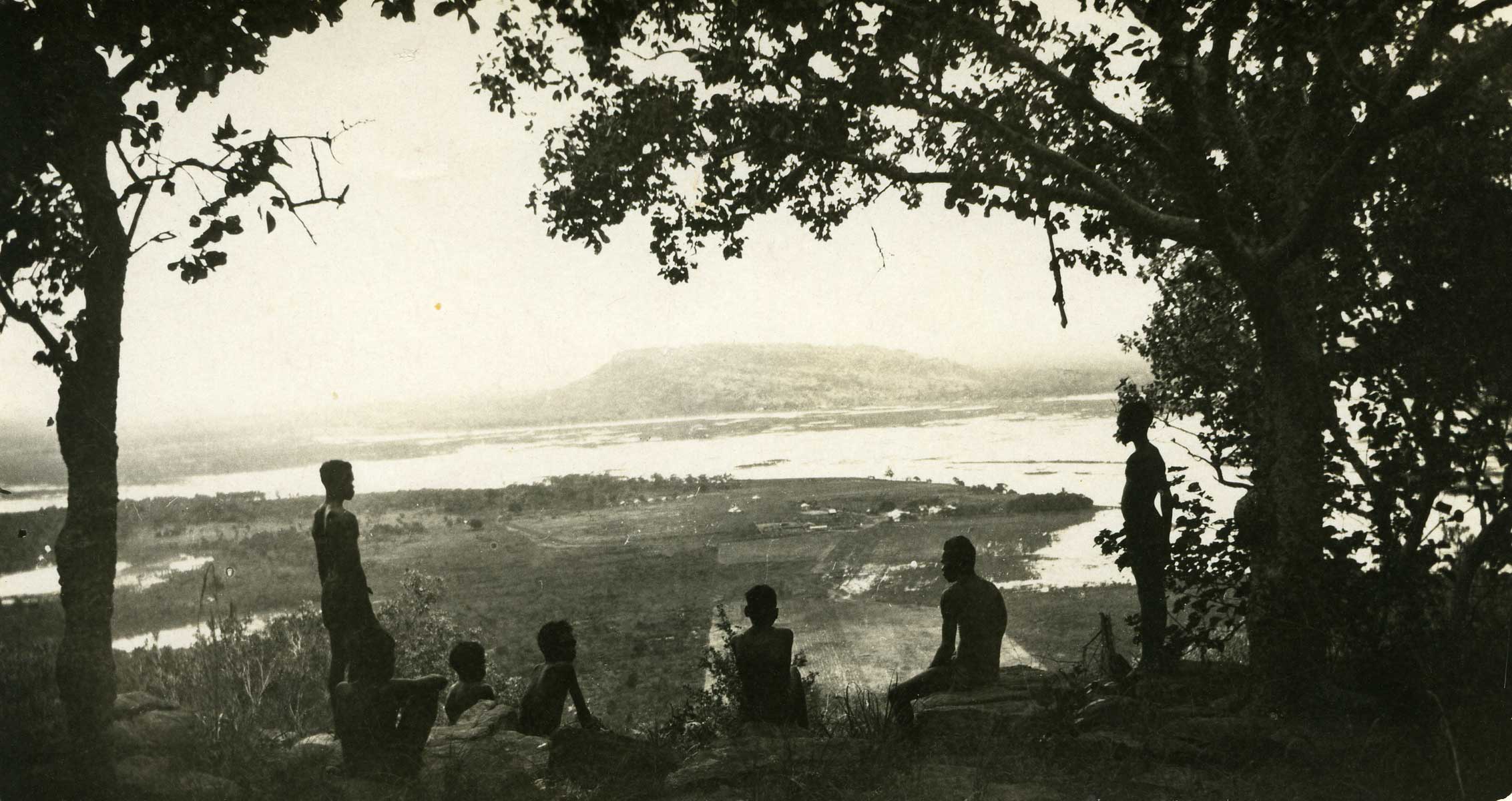
How historically accurate is the film High Ground? The violence it depicts is uncomfortably close to the truth
Laura Rademaker, the Research Centre’s Deputy Director, has joined with Dr Sally K May and Senior Traditional Elder Julie Narndal Gumurdul, to consider the historical accuracy of the film ‘High Ground’.
They conclude that ‘High Ground … is a highly dramatised piece of art. But, as the filmmakers have said, it’s closer to uncomfortable historical truths than we might expect. By showcasing such stories, the film will hopefully encourage broader reflection on Australia’s violent history, and its enduring legacies.’
Read the full article on The Conversation.
-
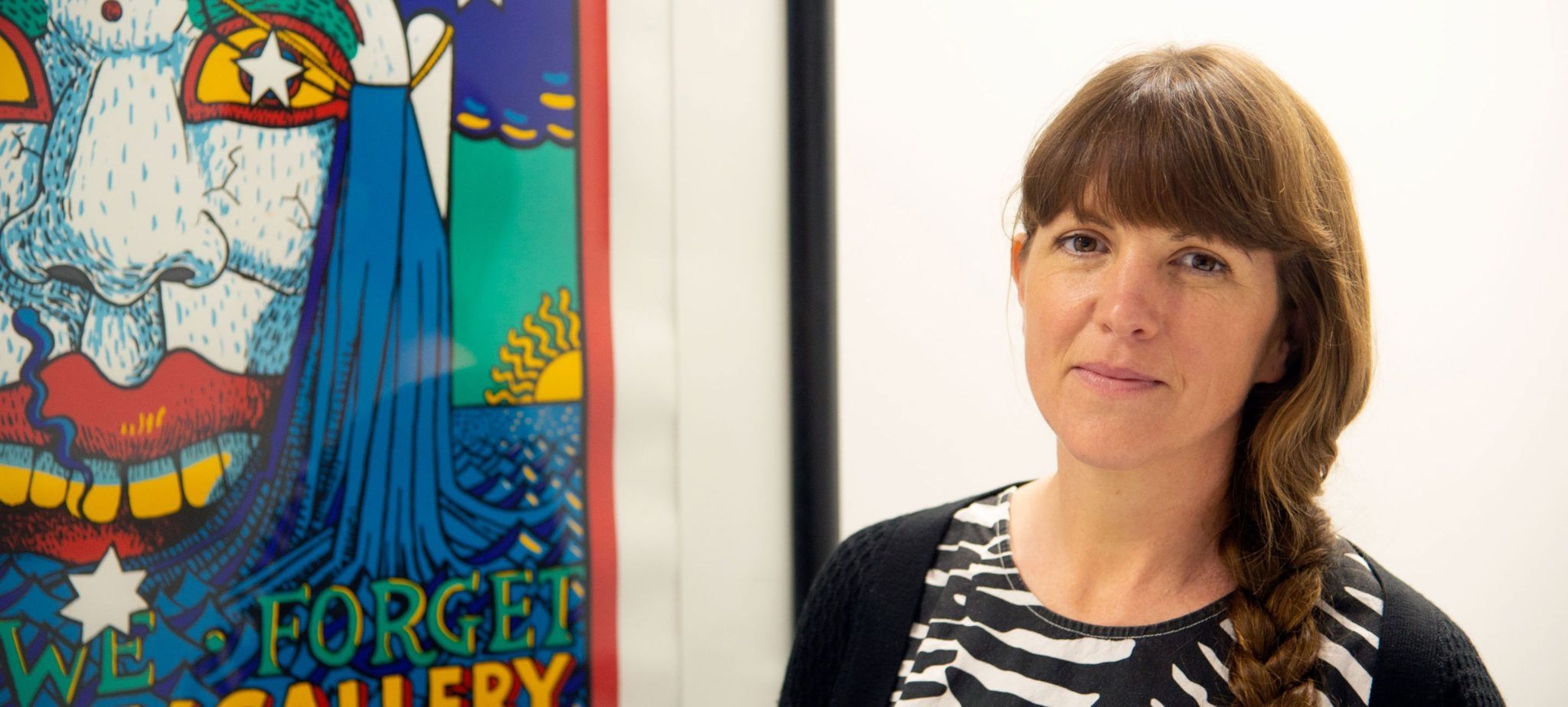
Charlotte Feakins wins at AAA 2020 Conference
Charlotte Feakins, one of the Research Centre’s Affiliated Students, was awarded the Australian Archaeological Association Conference 2020 Best Student Paper prize and the winner of the Maureen Byrne Award for Best Postgraduate Thesis at the Australian Society for Historical Archaeology Awards 2020.
The AAA conference paper was titled “The Ethics of Visibility in Kakadu National Park: Tourism, Archaeology and Colonial Debris” and was co-authored with Prof Tracy Ireland of University of Canberra. It was based on Charlotte’s award winning PhD thesis, “Behind the Legend: A Historical Archaeology of the Buffalo Shooting Industry 1875-1958”, which she is now hoping to publish as a book.
Charlotte is GML Senior Heritage Consultant and Team leader. Research Director Ann McGrath served as a member of Charlotte’s supervisory panel, together with Prof Tracy Ireland, Dr Sally Brockwell, and Dr Robert Levitus. Charlotte thanked them all for their support and encouragement over the years.

Publications


All rights reserved ® Research Centre for Deep History, The School of History, The Australian National University | Built by Tabs.